
Small Group Classes
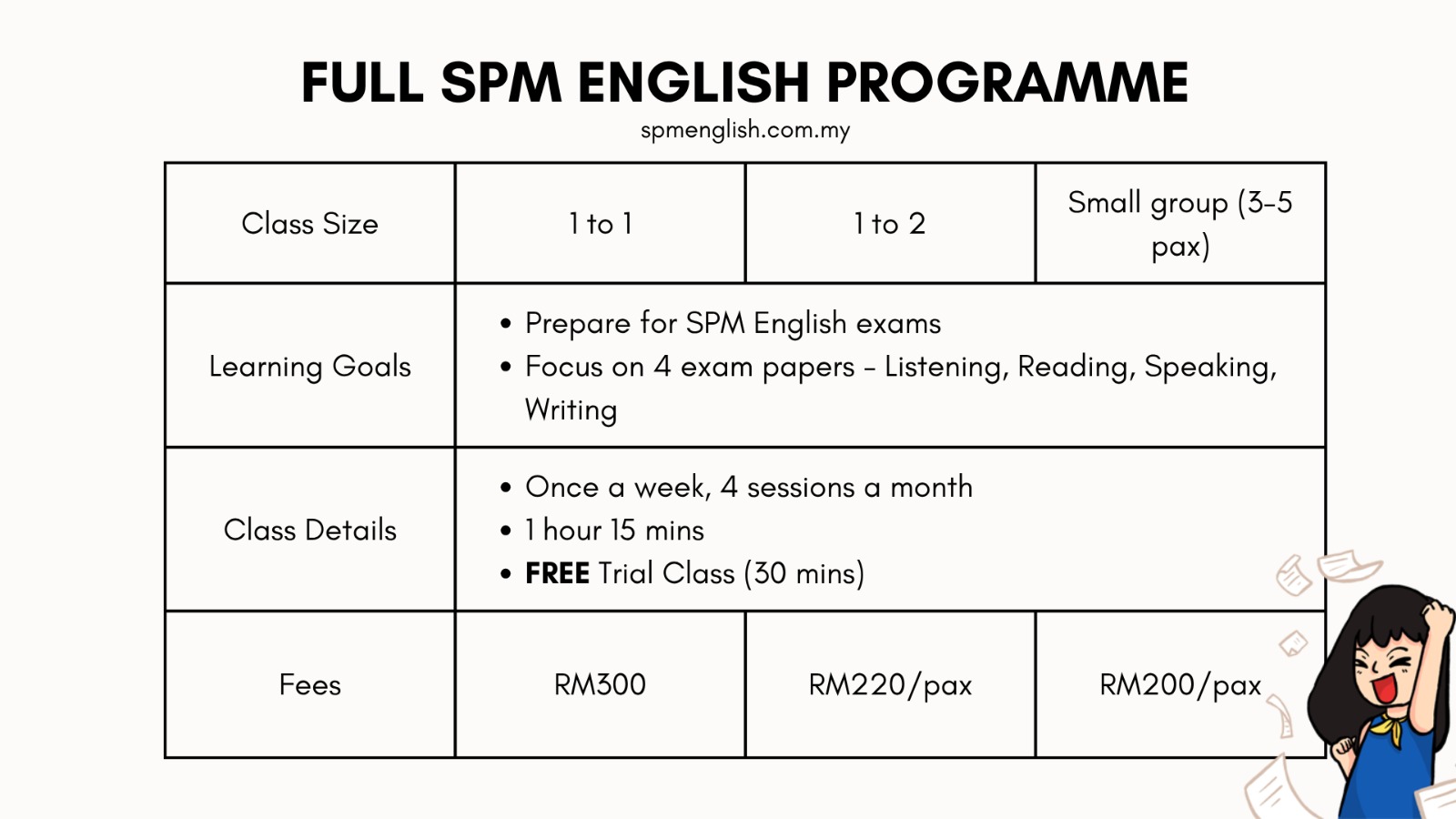
Learn SPM English in groups of max 8 students. You still get weekly personalised essay feedback — at a fraction of one-on-one pricing.
WhatsApp Us Now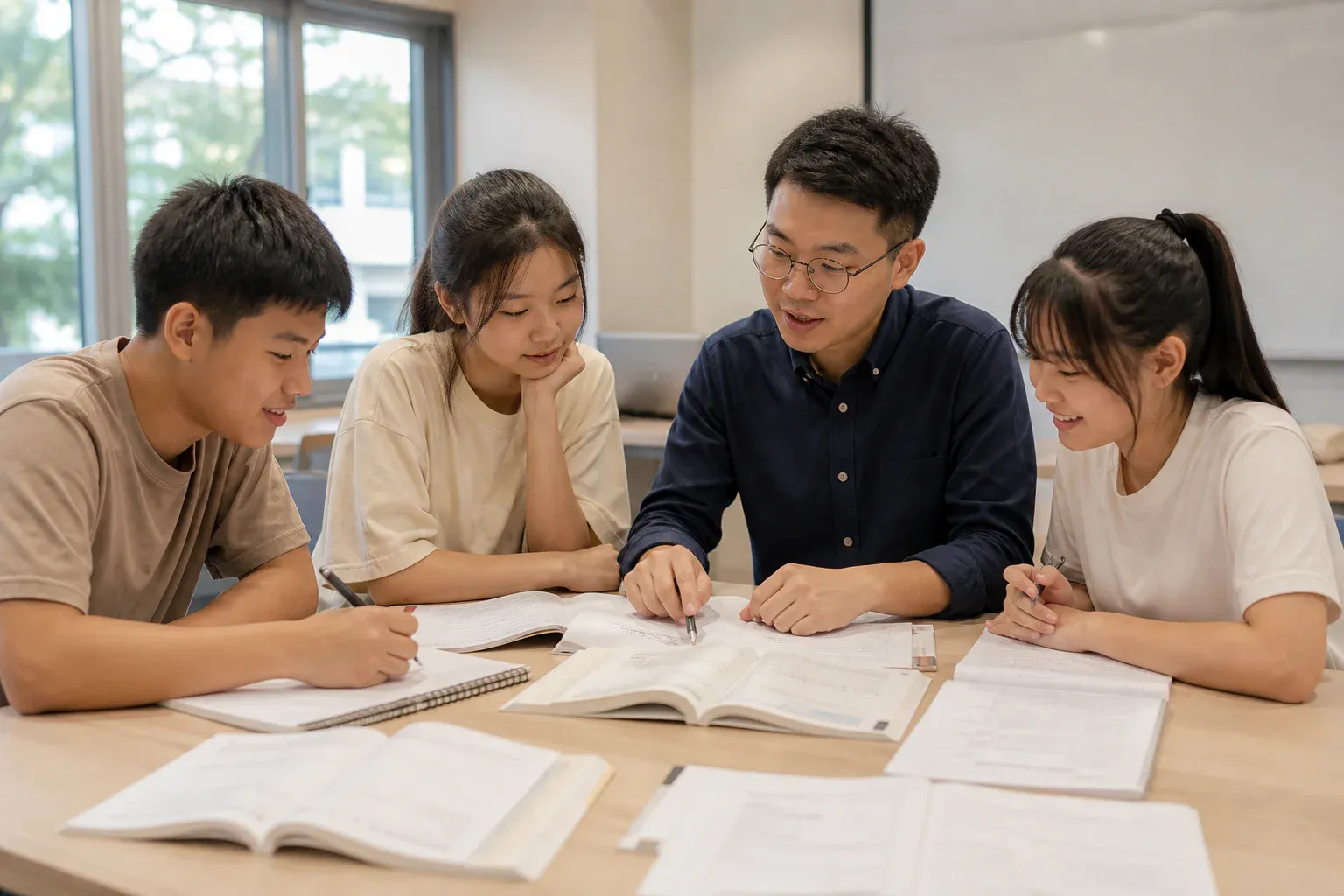
Big tuition centres pack 30-50 students into one class. Your child sits there, copies notes, and leaves without writing a single essay. No one checks their work. No one spots their mistakes. They pay monthly fees for months with zero improvement.
Our small groups cap at 8 students. Every student writes essays every week and gets personalised feedback. But you also get something one-on-one tutoring cannot offer: peer learning.
How Groups Are Formed
We do not throw random students together. Groups are formed by current grade level. If your child scores C, they learn alongside other C-grade students. D-grade students work with D-grade peers. This means the pace is right for everyone. No one sits bored waiting for weaker students to catch up. No one struggles to keep up with students who are already ahead.
Within each grade band, we also try to match students by school type. Chinese-medium students often share the same error patterns — Mandarin sentence structures that carry over into English writing. Grouping them together means the tutor can address these patterns once and everyone benefits.
What a Weekly Session Looks Like
Each 75-minute session runs on a structured schedule designed to maximize focus and improvement:
- First 15 minutes: Group essay review. The tutor displays one anonymised essay from the previous week (with the student's permission). The group identifies strengths and weaknesses together. This is where the real learning happens — you start recognising errors in others' work that you make in your own.
- Next 10 minutes: Individual feedback. While students review their own marked essays, the tutor rotates to give targeted verbal feedback to each student. You learn which specific mistakes cost you the most marks.
- Next 30 minutes: Guided practice. The tutor teaches one focused skill — paragraph structure, linking words, summary extraction, or comprehension strategies. Students practise together, compare answers, and discuss approaches.
- Final 20 minutes: Timed writing. Everyone writes under exam conditions. The tutor collects the work and returns it marked within 48 hours with line-by-line comments.
The Peer Learning Advantage
Research shows students retain information better when they teach it to others. In our small groups, this happens naturally. When one student explains why an essay introduction works well, they reinforce their own understanding. When another student spots a grammar error that the writer missed, both students learn.
Across 8 essays per week, common error patterns become visible. Students start saying things like: "Oh, I make the same mistake with tenses." That self-awareness — recognising your own errors without being told — is what drives lasting improvement.
Solo students never get this. They only see their own mistakes. In a group of 8, you see 8 different versions of the same assignment. You learn 8 different ways to approach the same essay question. Your repertoire of sentence structures, vocabulary, and arguments grows every week just from exposure.
How Feedback Still Stays Personal
With only 8 students, your tutor knows your name, your weak areas, and your target grade. Every essay you submit gets individual written feedback — the same quality as one-on-one tutoring. The tutor tracks your progress over time and adjusts focus areas as you improve.
Parents receive a monthly progress snapshot: current estimated grade, specific areas that improved, areas still needing work, and what the next month's focus will be.
Results Over 8 Years
Our small group students average a 2-grade improvement within 12 months. That matches most private tutoring results. The students who gain the most are typically C-grade students who move to A- or B+. They benefit from both the structured feedback and the motivation of learning alongside peers who share the same goal.
The biggest advantage of small groups is consistency. Students show up every week because their group expects them. There is a gentle social accountability that keeps attendance high and homework submission rates above 90%. Solo students are more likely to cancel or skip assignments when motivation dips.
Ideal For
Students scoring C to D who learn better with peers around them. Great for students who need structure and weekly accountability without the premium of one-on-one sessions.
What you get?
- ✓ Feedback on Essays (Paper 2 Writing)
- ✓ Mastery of Exclusive “Writing Formulas”
- ✓ Intensive Mock Speaking Sessions (Paper 3 Speaking)
- ✓ Tackle Past Year & Trial Papers
- ✓ A 100% Tailored Learning Pace
What Makes This Different
Ready to improve your SPM English? Most students see results within the first 3 months.
WhatsApp Us NowFrequently Asked Questions
Will my child still get personalised feedback in a group?
How are students grouped together?
What is the minimum commitment for small group classes?
Our tutoring follows the Ministry of Education Malaysia (MOE) KSSM syllabus and Lembaga Peperiksaan SPM English examination format.
Small Group Classes — Available in These Locations
Available online for students across all of Malaysia. View all locations.
Don't Wait Until It's Too Late
SPM is coming. Every week without proper guidance is a week of falling behind. Join our 1-on-1 or small group online classes — WhatsApp us now to get started.
WhatsApp Us NowNo commitment required. No hard sell. Just a conversation.